Extracting decision rationale from meetings audio dataset
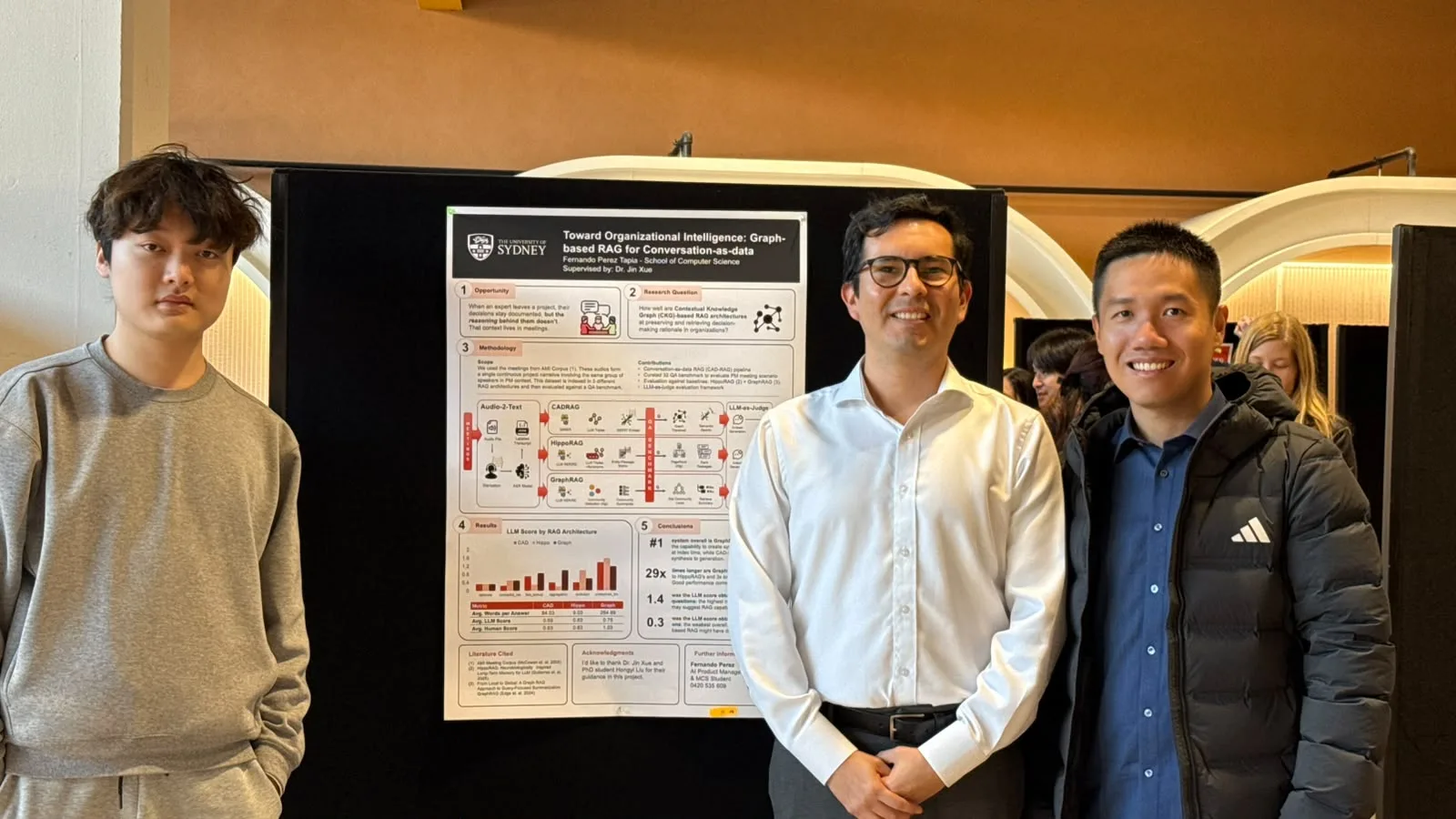
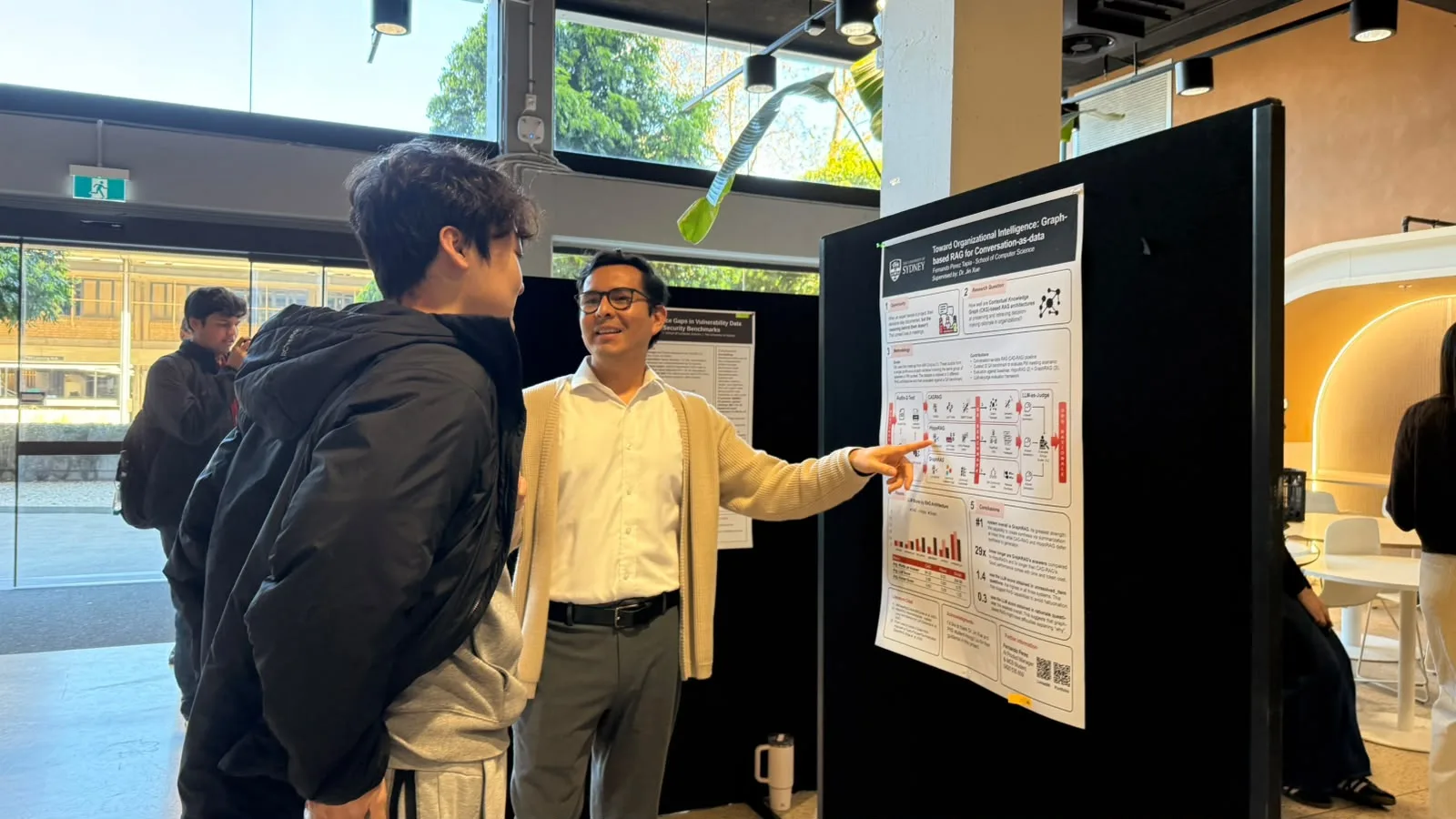
This project was developed over one month as part of a USYD research internship for which I was selected from a pool of 600 applicants.
Context:
In project-based organizations, the reasoning behind key decisions often lives only in the heads of the people who made them. When experts move on or projects change hands, that context disappears leaving successors with the outcome of a decision but not the "why" behind it.
Problem:
How can we recover and query the implicit decision-making rationale buried in unstructured meeting audio, so that project knowledge survives staff turnover? How does this approach compare to existing graph-based retrieval methods?
Solution
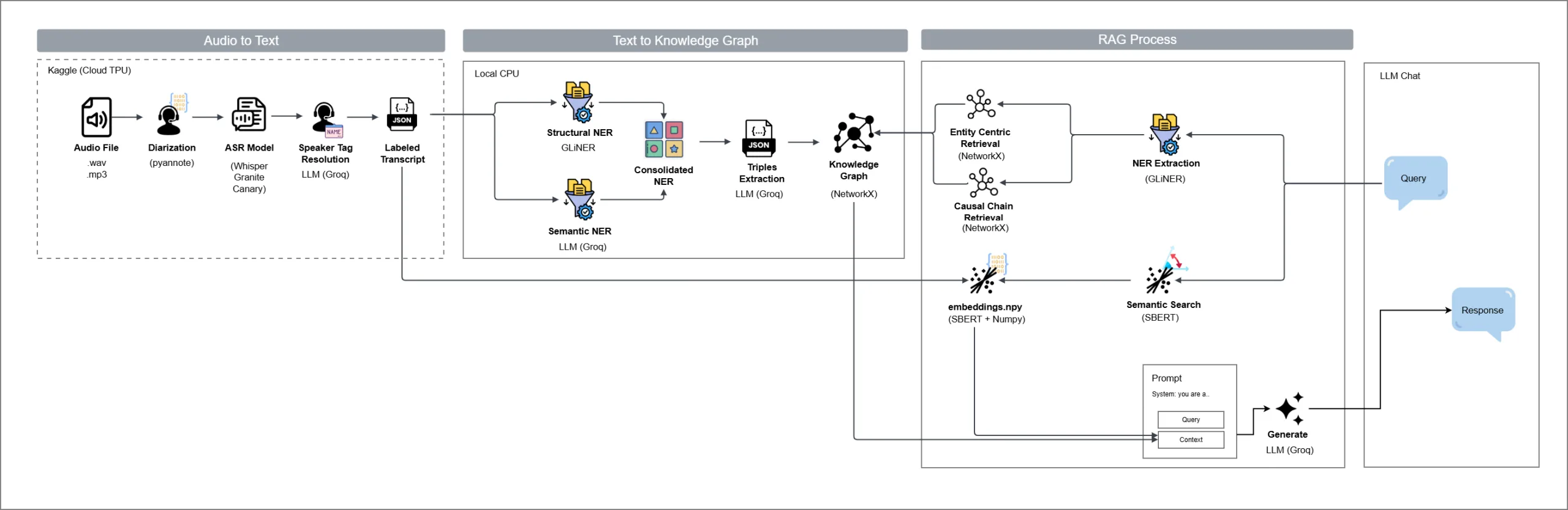
A graph-based Retrieval-Augmented Generation (RAG) system that converts raw meeting audio into a queryable knowledge graph. Transcripts are processed through a entity extraction pipeline using NLP techniques and linked into a cross-meeting graph capturing causal and evolutionary relationships between decisions.
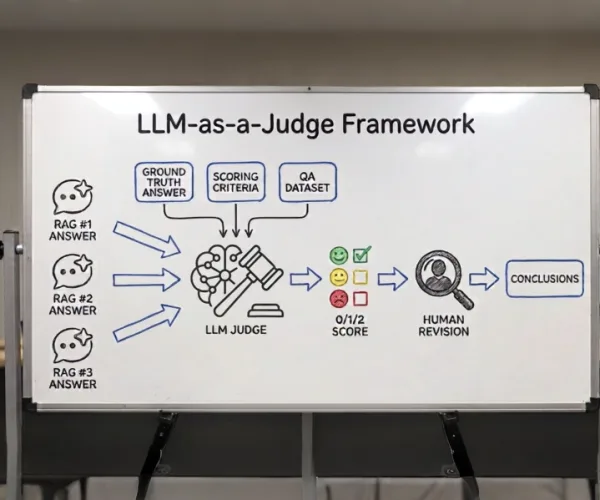
The system was benchmarked against two established open-source RAG baselines on a custom multi-question evaluation set, using an LLM-as-judge methodology validated against human agreement.
Core System Features
End-to-end audio-to-text pipeline: speaker diarization, transcription, and automatic speaker resolution.
Entity and relationship extraction combining NER with LLM-based extraction.
Sequential meetings unified into a unified knowledge graph.